what makes a cracked developer
background
1. What I consider a cracked developer
Where I come from
I grew up in the 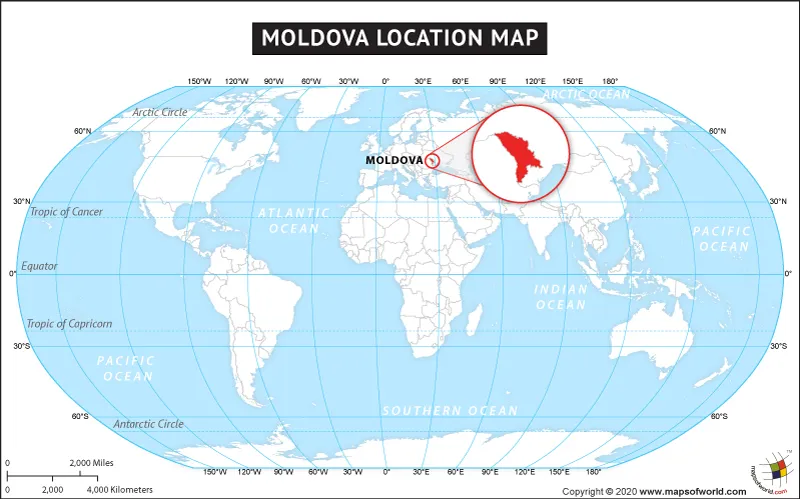 A small landlocked country between Romania and Ukraine, with Chișinău as its capital. It left the Soviet Union in 1991, speaks Romanian, and is one of the poorest countries in Europe., a country most people will struggle to point to on a map. I did not meet a single person with a gravitational pull towards building cool things until my first year of university. It makes sense. In a poor former Soviet republic people are busy closing the bottom of
 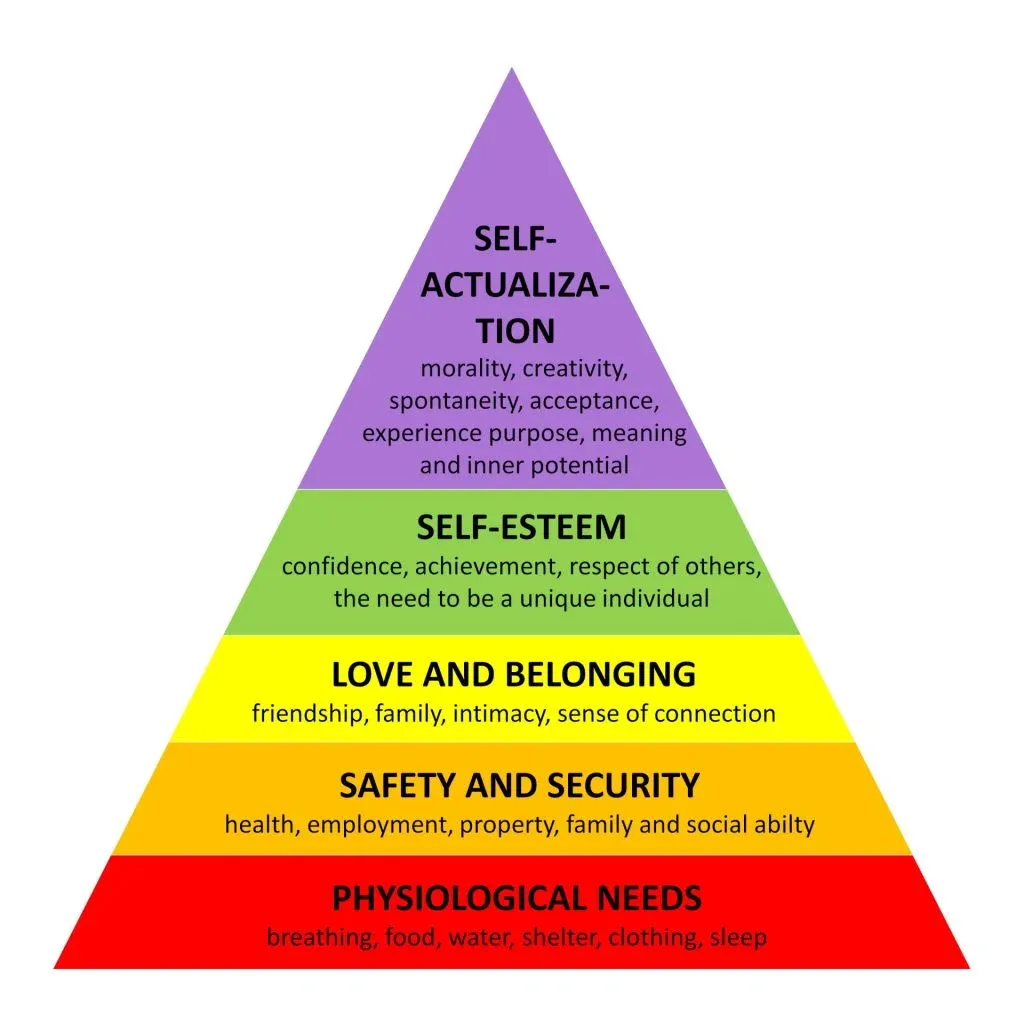 Abraham Maslow's hierarchy of needs. Food, shelter and safety sit at the bottom. Creative work and self-fulfilment sit at the top, and people rarely reach for them while the bottom is missing.. Nobody has the room to think about the top of it.
Since then I have been trying to work out what those people run on. I think it is two things.
High agency
A term I took from George Mack (opens in new tab). Most people treat the future as fixed. Some treat it as something you can push on, and those are the high agency ones. Mack splits it into three parts that rarely show up together: clear thinking, a bias to action, and disagreeability. Without clear thinking you run at the first bad idea in your head. Without action the idea stays a thought. Without disagreeability you stop the moment someone tells you no.
Prolific
You make a lot of things and most of them are bad. Dean Keith Simonton (opens in new tab) counted the output of scientists, composers and writers and found your number of hits is roughly proportional to your number of attempts. 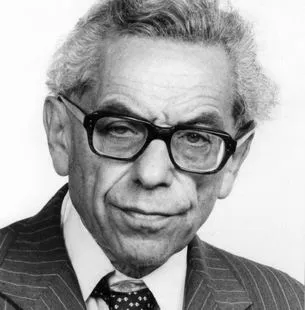 A Hungarian mathematician and one of the most prolific in history. He worked with more than 500 co-authors and lived out of a suitcase, moving from one collaborator's home to the next. wrote over 1,500 papers, and only a small share of them are well known. The rest are the reason those exist. Skills do improve with practice, so the rule is not exact, but the conclusion holds: make more things.
Everything below is my reading of my own data. Take it as an opinion.
2. Why should you care
Will becoming a cracked dev make you happy? Honestly, no idea. It is not for everybody, and you should ask yourself what you actually want before you copy anyone.
Agency guarantees nothing
In 1990 a team left Apple to build a handheld device that was a phone and a computer at the same time. That company,  Founded in 1990 by former Apple engineers, including Bill Atkinson and Andy Hertzfeld. Its Magic Cap software ran on early handheld communicators, which sold poorly. The company filed for bankruptcy in 2002., went bankrupt. A junior engineer there called Tony Fadell later helped build the iPhone.
The people I cannot see
I cannot show you the people who had all of this and got nothing. They never got famous enough for me to find, which is Survivorship bias. In World War II the US military wanted to add armour where returning bombers had the most bullet holes. The statistician Abraham Wald said to armour the spots with no holes, because planes hit there never made it back.. I only looked at people who already made it, so I have no idea what share of high agency developers fail. All I can tell you is that I did not find one who made it without it. You don’t know where you end up until you try.
3. What the median numbers tell us
The dataset
391 developers from one GitHub snapshot, each with at least one repo over 250 stars. I use The median is the middle value: half the developers sit above it and half below. One account with 100,000 followers pulls the average up but barely moves the median. here, because a few huge accounts drag the averages around: average followers 2,815, median 1,116.
Most of them are not famous
187 of the 391 have fewer than a thousand followers, and the lowest has 157. For the median developer, the best repo has about 2.7 times more stars than they have followers. People found the project first and the person second.
It took a decade
The median account was created in 2015. Only 49 joined in 2020 or later.
Most of what they built, nobody saw
The median developer has 38 public repos. The best one sits at 3,904 stars, the second at 767 and the fifth at 99. That is the Simonton's finding that each thing a creator makes has roughly the same chance of becoming a hit. You cannot predict which one will land, so more attempts mean more hits. sitting in a dataset. You see one repo. You do not see the other 37, and the other 37 are why the one exists.
4. What I learned
Maintaining beats launching
I expected the biggest group to be people with one viral project, but it is not. 130 of the 391 got there by keeping the same tool alive for years, against 93 who did it with a single repo. Boring, and it works.
Stars and followers are different games
The one-hit people have about ten times the stars of the maintainers and roughly the same number of followers. The only group with real followings built an audience on purpose, and their repos are smaller. Pick which game you are playing.
Nobody arrived
354 of the 391 still pushed code in 2026, years after the thing that made them known.
The one line
If you take one line from this: the only number in this dataset you control is how many times you try.
The full dataset and the categories are at cracked.draguta.dev (opens in new tab). Go find something I missed.